Many cat owners receive a blood test report from their veterinarian but feel confused by the medical terms and numbers.
What does SDMA, Creatinine, or BUN actually mean?
How do you know if your cat's kidneys are healthy?
Kidney disease is one of the most common health problems in cats, especially as they get older. The good news is that routine annual blood testing can detect early changes long before symptoms appear.
This guide explains the most important markers found in a feline blood chemistry panel and how veterinarians interpret them.
Why Cats Should Get Blood Tests Every Year
Cats are extremely good at hiding illness.
Many diseases — especially kidney disease — may develop for years before obvious symptoms appear.
Annual blood testing helps veterinarians:
- Detect early kidney disease
- Monitor liver function
- Identify metabolic disorders
- Track changes compared to previous years
The most powerful insight often comes from comparing results year-to-year.
Example Blood Test Report
Below is a real example of a feline blood chemistry panel.
The report compares results between 2025 and 2026, which helps show how veterinarians monitor trends.
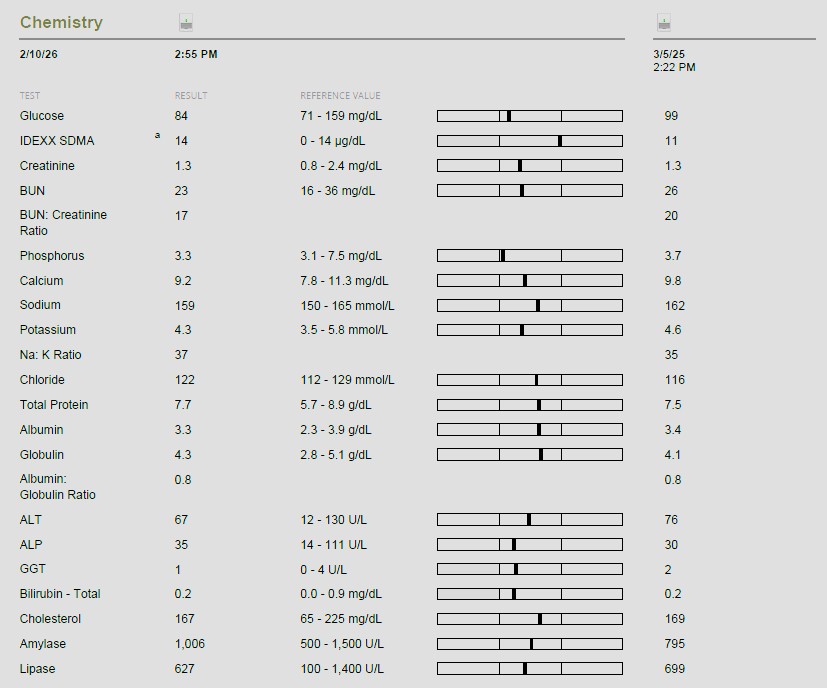
Tracking changes across multiple years is one of the most useful ways to detect early health issues.
Key Kidney Markers Explained
Kidney function is typically evaluated using three primary markers:
- SDMA
- Creatinine
- BUN
SDMA (Symmetric Dimethylarginine)
Normal range: 0–14 µg/dL
SDMA is one of the earliest indicators of kidney disease in cats.
Unlike creatinine, SDMA may increase even when kidney damage is still mild.
Interpretation
| SDMA Value | Meaning |
|---|---|
| 0–14 | Normal |
| 14–18 | Borderline |
| 18+ | Possible kidney disease |
Example Trend
| Year | SDMA |
|---|---|
| 2025 | 11 |
| 2026 | 14 |
This value is still within the normal range but close to the upper boundary. Veterinarians often monitor this marker closely over time.
Creatinine
Normal range: 0.8 – 2.4 mg/dL
Creatinine is a waste product filtered by the kidneys.
If kidney function declines, creatinine levels may rise.
Example
| Year | Creatinine |
|---|---|
| 2025 | 1.3 |
| 2026 | 1.3 |
Stable creatinine values usually suggest consistent kidney function.
BUN (Blood Urea Nitrogen)
Normal range: 16 – 36 mg/dL
BUN measures nitrogen waste in the blood.
Elevated levels may be caused by:
- kidney disease
- dehydration
- high protein diet
Example
| Year | BUN |
|---|---|
| 2025 | 26 |
| 2026 | 23 |
These values fall comfortably within the normal range.
Phosphorus
Normal range: 3.1 – 7.5 mg/dL
Phosphorus becomes particularly important in later stages of kidney disease.
Example
| Year | Phosphorus |
|---|---|
| 2025 | 3.7 |
| 2026 | 3.3 |
Normal phosphorus levels are a positive indicator for kidney health.
Other Blood Values You May See
A typical feline chemistry panel may also include:
Liver Enzymes
- ALT
- ALP
- GGT
These help assess liver health.
Protein Markers
- Albumin
- Globulin
- Total Protein
These provide insight into hydration, immune activity, and overall metabolic health.
Electrolytes
- Sodium
- Potassium
- Chloride
Electrolyte balance is essential for nerve and muscle function.
What Early Kidney Disease Looks Like
Early kidney disease often appears as subtle changes such as:
- Gradual increase in SDMA
- Slight rise in creatinine
- Increased BUN
- Changes in urine concentration
At this stage, cats may still appear completely healthy.
What To Do If Kidney Markers Increase
If blood tests suggest possible kidney stress, veterinarians typically recommend:
Urinalysis
A urine test helps evaluate:
- urine concentration
- protein levels
- infection
- kidney filtration ability
Increase Hydration
Cats benefit from improved hydration through:
- wet food diets
- water fountains
- multiple water bowls
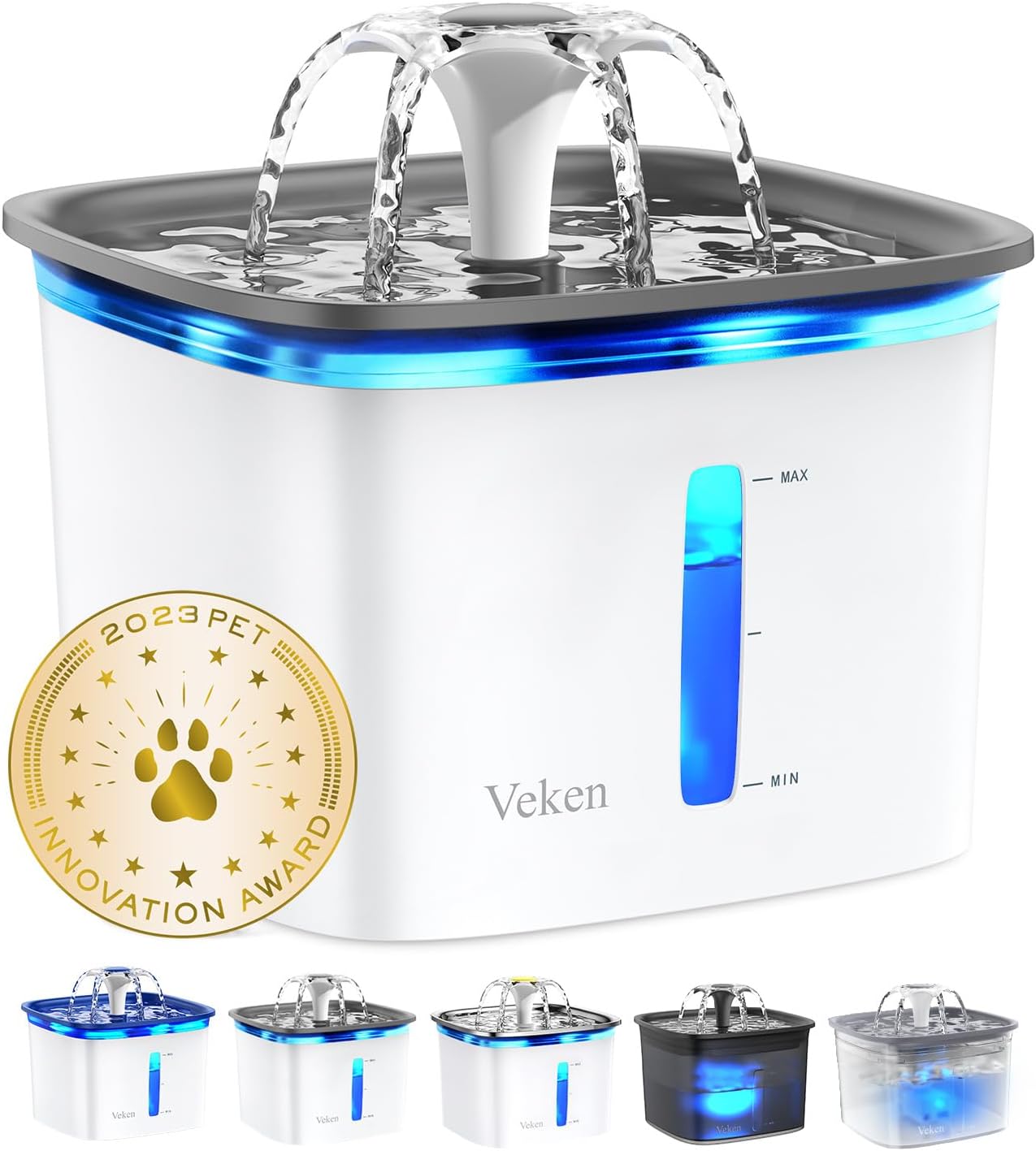
Cat Water Fountain
Encourages cats to drink more water with flowing fountain design. Helps prevent dehydration and supports urinary and kidney health. Quiet operation and easy to clean.
View on Amazon →Kidney-Support Diet
Veterinary diets designed for kidney health may reduce workload on the kidneys.
Follow-Up Testing
If abnormalities appear, veterinarians may recommend repeating blood tests every 3–6 months.
Can You Check Your Cat's Urine at Home?
Some pet owners use home urine test strips as an early screening tool.
These strips can sometimes detect:
- blood in urine
- glucose
- abnormal pH
However, they cannot replace a veterinary urinalysis, which provides far more accurate diagnostic information.
Home tests may simply help determine whether a vet visit should be scheduled sooner.
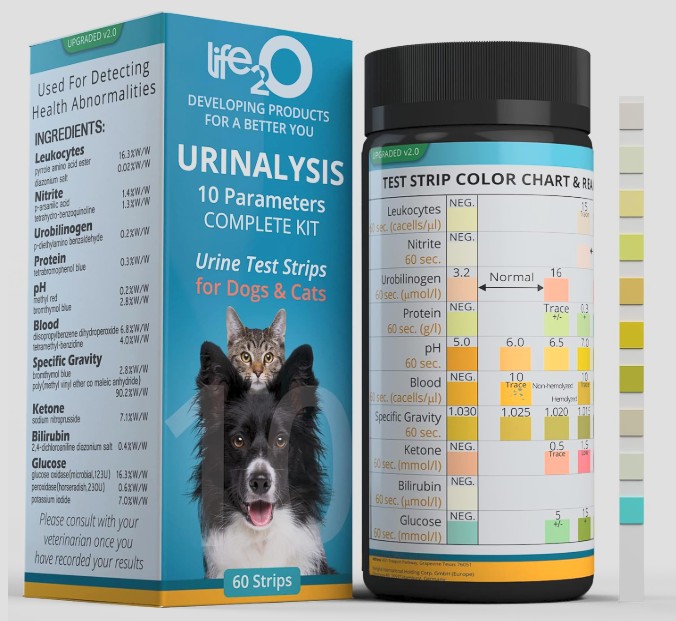
Home Urine Test Strips for Cats
At-home urine screening strips for cats. Can detect blood, glucose, and pH abnormalities. Useful as an early indicator between vet visits. Does not replace professional veterinary urinalysis.
View on Amazon →Monitoring Trends Is More Important Than One Number
One of the most important insights veterinarians look for is trend over time.
A single abnormal value does not always indicate disease.
However, consistent upward trends across multiple years may signal early health changes that require monitoring.
Comparing blood test results from 2025 and 2026 provides a clearer picture of overall health.
Key Takeaway
Annual blood tests are one of the most valuable tools for protecting your cat's health.
By tracking markers such as:
- SDMA
- Creatinine
- BUN
- Phosphorus
veterinarians can detect kidney disease early and take steps to slow its progression.
Routine testing helps ensure that cats stay healthy and active for many years.
Affiliate Disclosure: This post contains affiliate links. If you purchase through these links, we may earn a small commission at no additional cost to you. We only recommend products we genuinely trust and believe will benefit your cats.