Indoor cats can live wonderfully happy lives, but they still need chances to move, explore, scratch, watch, and solve small problems every day.
With Maruay and Numchoke, I have learned that enrichment is not about buying the most expensive toy. It is about giving cats different ways to use the instincts they already have. Maruay loves a high view from the cat tree, while Numchoke is happy to investigate a food puzzle when something interesting is happening on the floor.
The best enrichment routine gives cats a choice. Here are ten practical ideas that work in a normal home.
What Does Cat Enrichment Mean?
Cat enrichment means providing safe activities and spaces that support natural feline behaviors. That includes hunting, chasing, scratching, climbing, hiding, observing, exploring, grooming, and resting.
Enrichment is especially important for indoor cats because they have fewer opportunities to explore a changing outdoor environment. It can also help prevent boredom and encourage healthy movement. The goal is not to keep a cat busy every minute. The goal is to make the home interesting enough that the cat can choose how to spend their time.
1. Use Food Puzzles Instead of Serving Every Meal in a Bowl
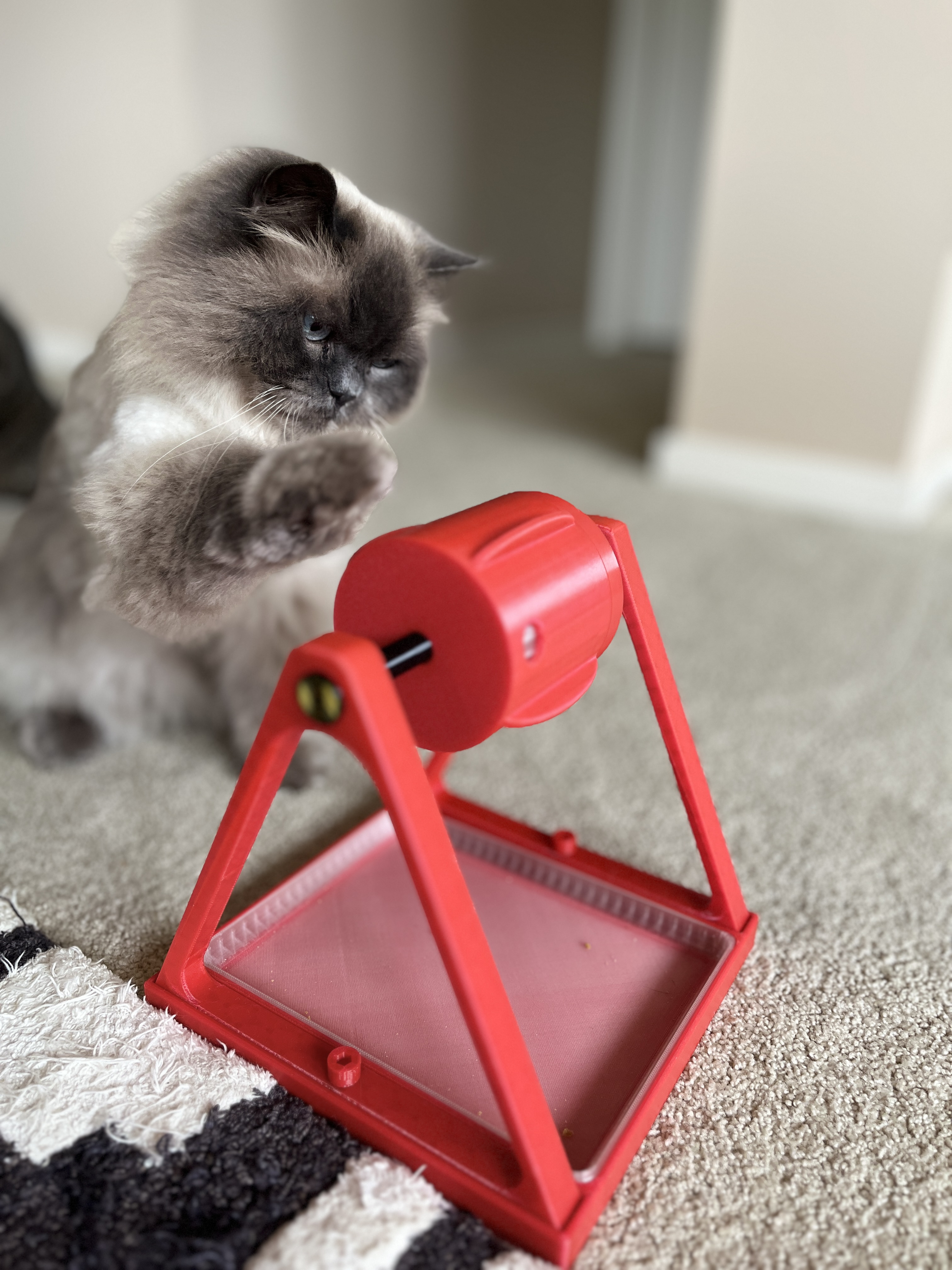
A roller feeder or puzzle feeder turns part of mealtime into a simple hunting game. Instead of eating immediately from a bowl, your cat has to paw, push, or roll the toy to release a small amount of food.
Start with an easy puzzle and only use a portion of the daily food allowance. If the puzzle is too difficult, a cat may become frustrated and give up. Once your cat understands how it works, you can gradually make the challenge more interesting.
Numchoke's roller feeder is a good example of this kind of enrichment. It gives him a reason to investigate, move around, and work for small rewards.
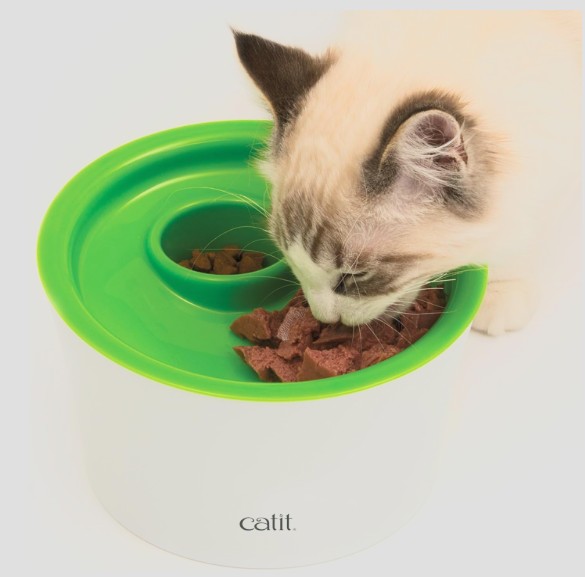
Slow Feeder Cat Bowl
Helps prevent cats from eating too fast. Puzzle-style design encourages slower eating and better digestion. Reduces vomiting caused by rapid eating. Easy to clean and dishwasher safe.
View on Amazon →2. Make Interactive Play Part of the Daily Routine
Interactive play is different from leaving a toy on the floor. A wand toy, feather toy, or other chase toy gives you a chance to imitate the movement of prey.
Try short sessions rather than one long session:
- Move the toy slowly, then pause.
- Let your cat stalk before the chase begins.
- Change direction instead of waving the toy constantly.
- End with a successful catch.
Keep string, ribbon, and wand toys put away when you are not supervising play. Loose string can be dangerous if swallowed.

Interactive Wand Cat Toy
Engages your cat's natural hunting instincts. Strengthens bond through interactive play. Provides mental stimulation and physical exercise. Cats love it!
View on Amazon →3. Give Your Cat a Reliable Scratching Place
Scratching is normal cat behavior. It helps cats stretch, condition their claws, and leave both a visual and scent signal. A scratching post is not just furniture; it is an outlet for an important behavior.
Place the post where your cat already spends time, such as near a sleeping area, a doorway, or a favorite piece of furniture. A post that is tall and stable enough for a full-body stretch is usually more useful than a short post that wobbles.
Reward your cat for using it, but do not drag their paws across the surface. Let them discover it naturally.
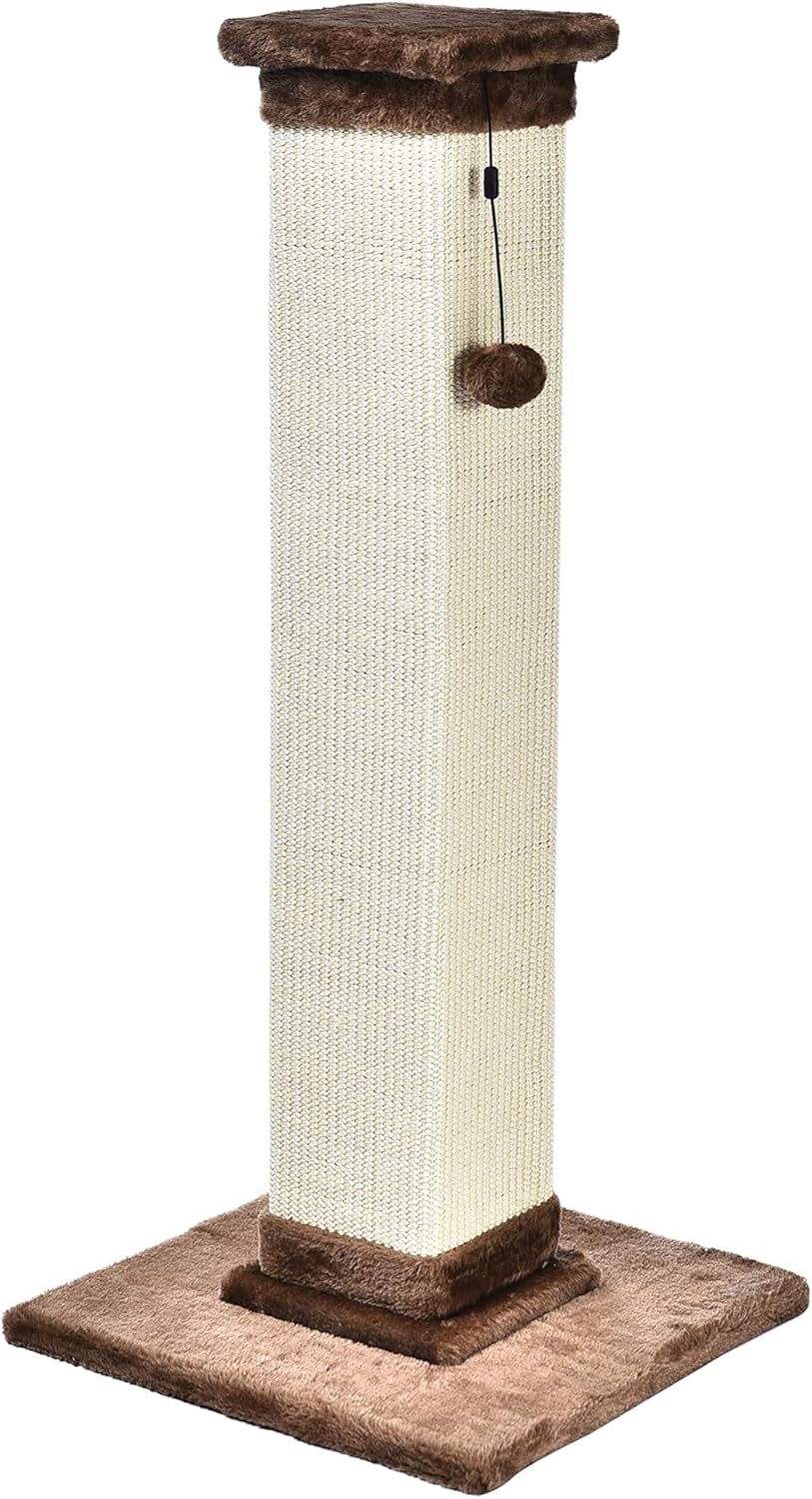
Natural Sisal Cat Scratching Post
Natural sisal rope construction provides durable scratching surface. Sturdy base prevents wobbling. Tall design allows full-body stretching. Saves your furniture from damage.
View on Amazon →4. Add Vertical Space
Cats often feel more comfortable when they can observe a room from above. A cat tree, window perch, shelf, or secure top of a piece of furniture can provide exercise and a safe observation point.
Maruay regularly chooses the top level of his cat tree. From there, he can watch the room, look outside, and take a break from activity below.
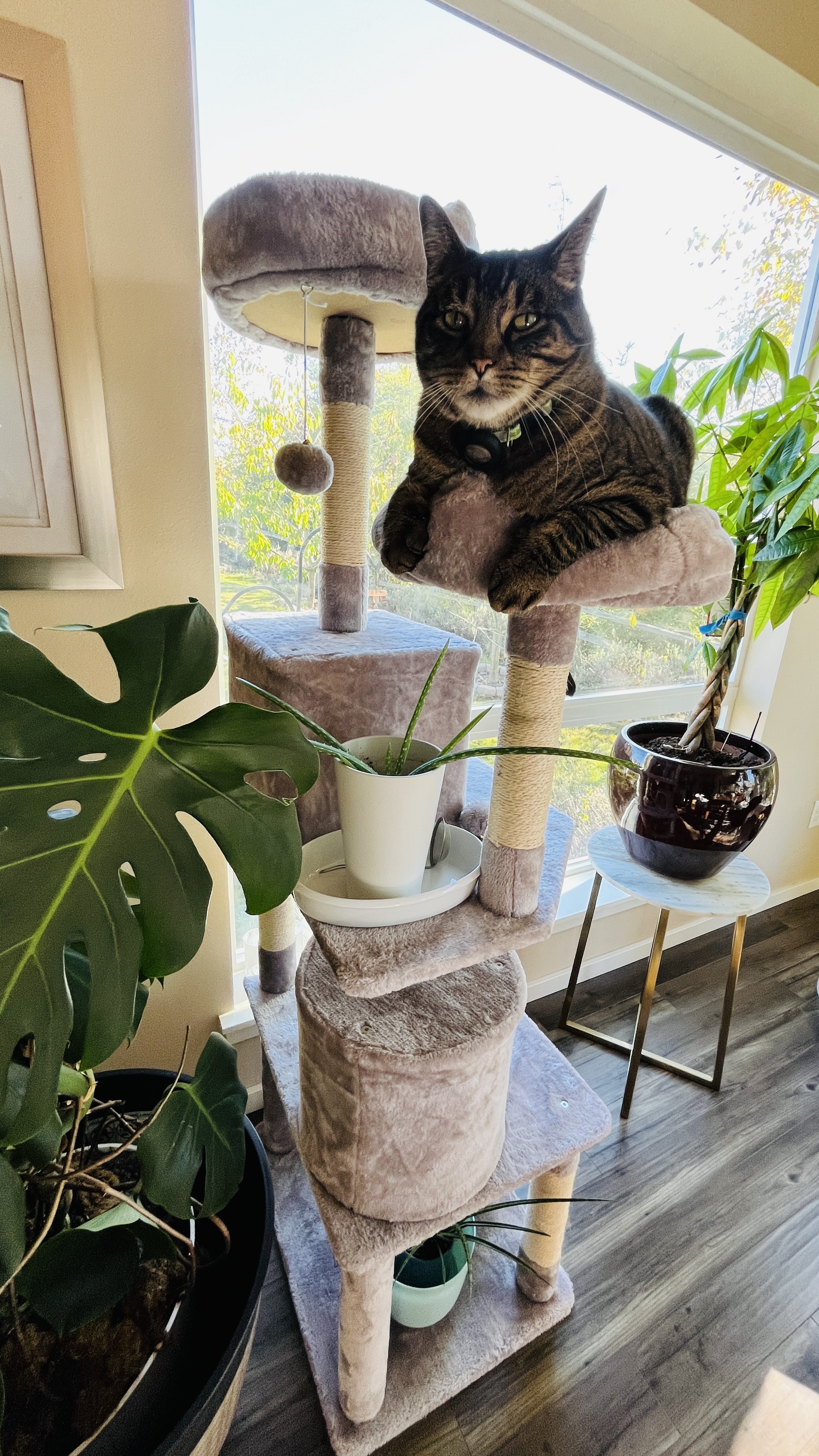
Make sure any elevated spot is stable and away from unsafe jumps. Windows should have secure screens, and plants within reach should be checked for cat safety.
5. Create a Window-Watching Station
A window can provide hours of changing sights, sounds, and smells. Place a comfortable perch near a safely screened window so your cat can watch birds, people, trees, and weather.
If the window gets strong direct sun, provide a shaded alternative. A window station should be an invitation, not a place where your cat is trapped in heat.
6. Rotate Toys Instead of Leaving Everything Out
When every toy is available all the time, toys can become part of the background. Keep a small selection out and store the rest. Rotate them every few days so familiar toys feel new again.
You can rotate between:
- Chasing toys
- Kicker toys
- Balls and springs
- Catnip or silvervine toys
- Food puzzles
- Simple cardboard boxes
Watch which toys each cat chooses. Maruay may prefer movement and height, while Numchoke may prefer food-based investigation or a comfortable place to watch.
7. Use Cardboard Boxes and Paper Bags
Enrichment does not have to be expensive. A clean cardboard box can become a hiding place, ambush point, or nap spot. Paper bags can also be interesting, but remove handles and supervise use.
Move the box occasionally or place a toy just outside it. Small changes encourage exploration without turning the room upside down.
8. Grow Safe Cat Grass
Some cats enjoy nibbling cat grass. A small indoor growing kit can add a different texture and smell to the environment, especially for cats who like to investigate plants.
Only offer plants that are known to be safe for cats. Keep decorative plants out of reach until you have verified that they are non-toxic.

Indoor Cat Grass Growing Kit
Safe, organic cat grass you can grow indoors. Satisfies your cat's natural urge to chew on greens. Helps with digestion and hairball control. Easy to grow — just add water.
View on Amazon →9. Turn Mealtime Into a Treasure Hunt
You can hide a few pieces of your cat's regular kibble in easy-to-find locations around a room. Start with visible hiding places, such as beside a cat tree or near a favorite bed, then make the search slightly more challenging.
Use only food that is already part of the daily diet, and reduce the bowl portion so you are not accidentally adding extra calories. This activity is best for cats who are comfortable eating and exploring independently.
10. Protect Rest and Hiding Time
Good enrichment includes rest. Cats need quiet places where they can sleep without being disturbed. A covered bed, high perch, open carrier, or calm room can give your cat control over when to participate.
Do not pull a cat out of a hiding place just because you want to play. A cat who can choose when to interact is more likely to feel secure and confident.
How Maruay and Numchoke Choose Enrichment
The most useful lesson from living with two cats is that enrichment is individual.
Maruay often enjoys height, window views, and places where he can observe the household. Numchoke may be more interested in a food puzzle, a comfortable perch, or a close-up investigation of something new.
That does not mean every cat will have the same preferences. Offer several choices, notice what gets repeated, and build a routine around those preferences.
A Simple Daily Enrichment Routine
You do not need a complicated schedule. A practical routine might look like this:
- Offer breakfast in a bowl or easy food puzzle.
- Schedule a short interactive play session.
- Keep a scratching post and elevated resting place available.
- Rotate one toy or add one simple exploration item.
- Offer a quiet window perch or hiding place.
- End the day with calm play, grooming, or a small food search.
Final Thoughts
Keeping an indoor cat entertained is less about constant entertainment and more about creating a home with choices. Food puzzles, scratching posts, climbing spaces, window views, boxes, toy rotation, and quiet hiding places can all make a meaningful difference.
Start with one change and watch your cat's response. If the roller feeder gets attention, keep building food-based games. If the cat tree becomes a favorite, add safe ways to climb and observe. When enrichment matches the cat in front of you, even simple activities can become part of a happy daily routine.
Every cat is different. Introduce new toys and foods gradually, supervise unfamiliar items, and ask your veterinarian for advice if your cat shows sudden changes in appetite, activity, or behavior.
Affiliate Disclosure: This post contains affiliate links. If you purchase through these links, we may earn a small commission at no additional cost to you. We only recommend products we genuinely trust and believe will benefit your cats.