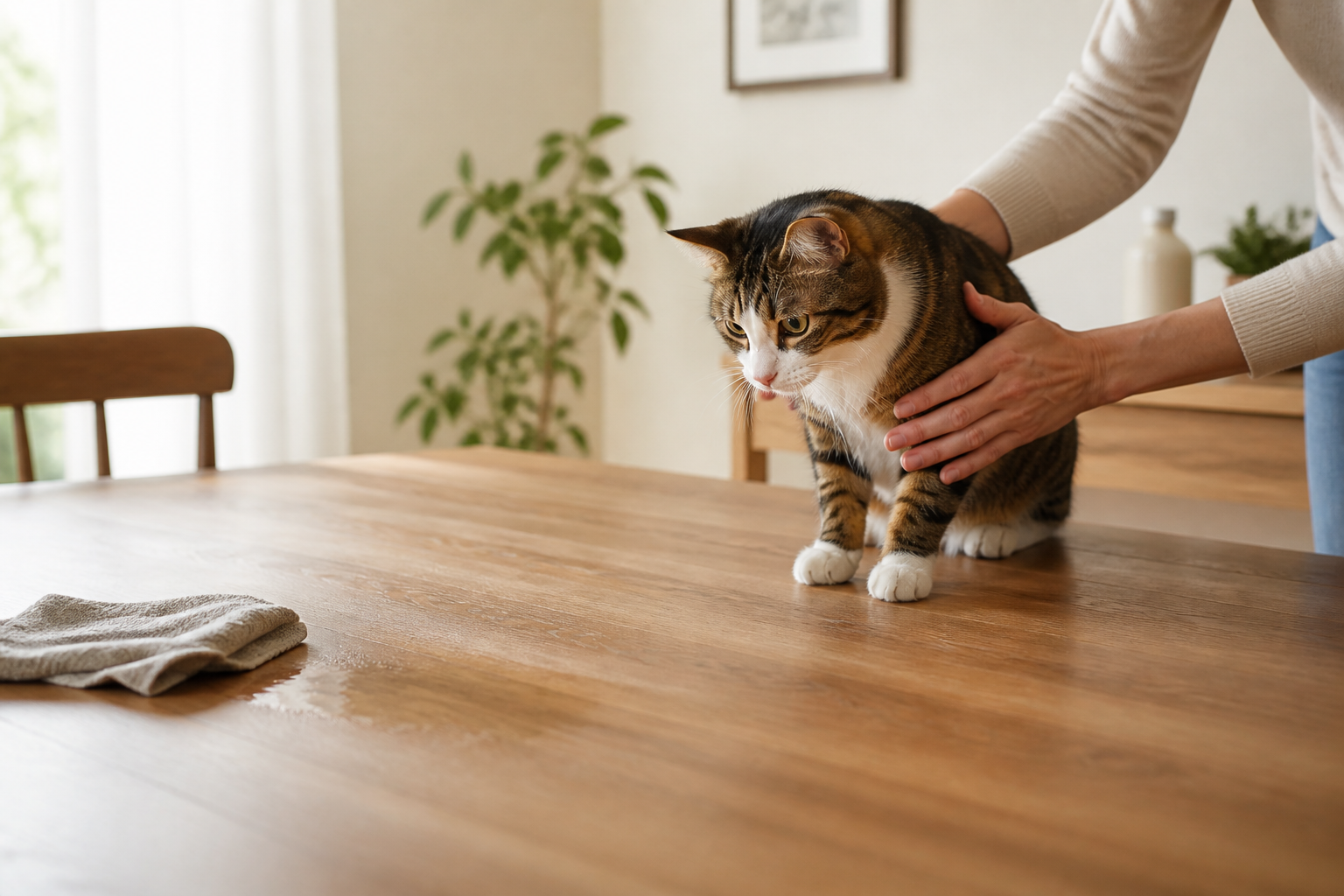
You notice the sound before you see what happened: a bucket tips over, your cat walks through the wet patch, or a bottle is missing from the place where you left it. Then you see your cat licking their paws.
That moment is scary. The most useful thing you can do is slow down enough to take the next safe step. If a cat may have swallowed, inhaled, or gotten a toxic substance on their skin, do not wait to see whether they become sick. Call a veterinarian or emergency veterinary hospital and ask what to do now.
Emergency: If your cat is having trouble breathing, collapsing, seizing, bleeding, unable to stand, unconscious, or showing severe mouth irritation after a chemical exposure, go to an emergency veterinary hospital immediately. Call ahead if you can do so safely.
What to do right now
1. Stop the exposure safely
Move your cat away from the spill, fumes, plant, food, medicine, or chemical. Protect yourself first. If the substance is producing strong fumes, leave the area with your cat and get into fresh air. Do not mix cleaning products while trying to clean up; bleach mixed with ammonia or other chemicals can create dangerous gas.
If the substance is on your cat's fur, paws, or skin, stop them from grooming if you can do so without being bitten or scratched. Call the veterinary hospital while you arrange gentle rinsing. For eye exposure, flush the eye with clean water or saline and seek veterinary advice immediately. For a significant skin exposure, rinse thoroughly with water and ask the vet whether bathing is needed.
2. Call before trying a home remedy
Tell the veterinarian exactly what happened, even if you are not sure your cat swallowed anything. Give them:
- The product name and ingredient list
- The time of exposure
- Your best estimate of how much may be missing
- Your cat's weight and age
- Any symptoms you have noticed
- A photo of the label, container, spill, or plant if it is safe to take one
If you are in the United States, a veterinary poison-control service can also help assess the exposure. If you are elsewhere, contact your local emergency veterinary hospital or animal poison service.
3. Do not make your cat vomit unless a veterinary professional specifically tells you to
Do not use hydrogen peroxide, salt, oil, human medicine, or a homemade antidote. Do not give activated charcoal unless a veterinary professional instructs you to. With corrosive substances such as concentrated bleach, vomiting can cause additional injury as the chemical comes back up. A sleepy, weak, or neurologically abnormal cat can also inhale vomit into the lungs.
Do not force food or water into a cat that is coughing, gagging, vomiting, having trouble swallowing, or breathing abnormally. Ask the veterinary professional what is safe for the specific substance.
Common real-life situations
“My cat drank from a bucket with chlorine or bleach.”
This can happen with a mop bucket, bathroom cleaner, pool chemical, or a recently cleaned surface. The risk depends on the product concentration and how much was swallowed. Concentrated bleach can injure the mouth and esophagus, while fumes can irritate the airways. Signs may include drooling, gagging, vomiting, coughing, sneezing, pawing at the mouth, eye irritation, or difficulty breathing.
Move your cat away from the fumes. Do not induce vomiting and do not give activated charcoal. If chemical is on the fur or skin, rinse it away with plenty of water while contacting a veterinarian. Bring the product container or a clear label photo.
A real moment from our home
One time, while I was cleaning a table with a bleach solution, I leaned the table against a wall. The solution dripped down and ran onto the cement floor, and Numchoke ran straight into the wet patch and settled down on it. He went crazy for it, almost as if he had found catnip. I honestly did not expect that reaction.
Some veterinarians think the chlorine-like smell may remind certain cats of urine or other scent signals, which could explain the rubbing, rolling, purring, racing, or intense interest some owners see. That is a theory, not a proven explanation, and it does not mean bleach is safe. Cats may not avoid a strong-smelling chemical; curiosity, comfort, or simply not understanding the danger can put them right in the wet spot.
If Numchoke—or any cat—does this, move them away from the floor, stop them from grooming if you can do so safely, rinse the paws or fur with water, and call your veterinarian for product-specific advice. A smell that seems unpleasant to us is not a reliable safety barrier for a cat.
“My cat licked coolant or antifreeze.”
Treat this as an emergency, even if your cat seems almost normal. Ethylene glycol, found in some vehicle coolants and other fluids, can be absorbed quickly and can cause severe kidney failure. Early signs can look like alcohol intoxication: vomiting, unusual thirst or urination, wobbling, weakness, or sleepiness. A cat may appear to improve briefly before serious kidney injury develops.
Do not wait for symptoms and do not try to treat this at home. Go to a veterinary hospital immediately and tell them you are concerned about ethylene-glycol exposure. Early treatment matters.
“My cat ate fertilizer from a bag, lawn, or plant pot.”
Fertilizer is not one single substance. Some small exposures cause stomach upset, but larger amounts or products containing iron, pesticides, herbicides, fungicides, or meal-based ingredients can be much more serious. A cat may drool, vomit, develop diarrhea, seem painful in the abdomen, become weak, or have trouble breathing.
Remove access to the product and call the vet with the exact label. Do not guess that a fertilizer is safe because it is called natural or organic. Do not let your cat groom fertilizer from their paws or fur; rinse the area and ask the veterinary team for instructions.
Other exposures worth taking seriously
Call promptly for human medicines, rodent or insect products, concentrated cleaners, essential oils, automotive fluids, unknown pills, or plants that may be toxic to cats. The same amount can affect different cats differently, and a product name alone may not reveal all of its ingredients.
Signs that mean “go now”
Do not wait for a callback if your cat has:
- Open-mouth breathing, severe coughing, blue or pale gums, or rapidly worsening breathing
- Collapse, seizures, loss of consciousness, or extreme weakness
- Repeated vomiting, bloody vomit, or severe drooling
- Trouble swallowing or obvious burns around the mouth
- Severe wobbling, confusion, or inability to walk normally
- A known or strongly suspected exposure to coolant, pesticide, rodenticide, or a concentrated chemical
If possible, place the product in a sealed bag or take a photo of the label. Do not delay the trip while searching online for a diagnosis.
What the veterinary team may need to know
A vet may ask about the exact product, exposure route, amount, and timing. They may examine the mouth and eyes, check breathing and hydration, and run blood or urine tests. Some toxins have treatments that work best very early, while others require observation for delayed problems. This is why a cat that looks fine can still need urgent advice after a suspected exposure.
Preventing the next scare
- Keep cleaners, coolant, fertilizer, pesticides, medicines, and essential oils in closed cabinets.
- Clean vehicle-fluid spills immediately and keep cats away until the area is safe.
- Never leave a mop bucket or cleaning solution where a cat can drink from it.
- Follow product labels and keep cats away until treated surfaces are dry and well ventilated.
- Store products in their original containers so the ingredient list is available in an emergency.
- Ask visitors not to leave pills, bags, or drinks where a curious cat can reach them.
If this is happening right now, close this article and call a veterinary professional. The goal is not to identify the toxin perfectly at home. The goal is to stop further exposure and get the right help quickly.
Sources used
- ASPCA: Poisonous Household Products
- Merck Veterinary Manual: Household Hazards
- Merck Veterinary Manual: Ethylene Glycol (Antifreeze) Poisoning
- Pet Poison Helpline: Fertilizers
- Pet Poison Helpline: Emergency Instructions for Pet Poisoning
- Catster: Why Do Cats Like the Smell of Bleach?
Sources checked: Tue Aug 18 2026 17:00:00 GMT-0700 (Pacific Daylight Time)
Affiliate Disclosure: This post contains affiliate links. If you purchase through these links, we may earn a small commission at no additional cost to you. We only recommend products we genuinely trust and believe will benefit your cats.