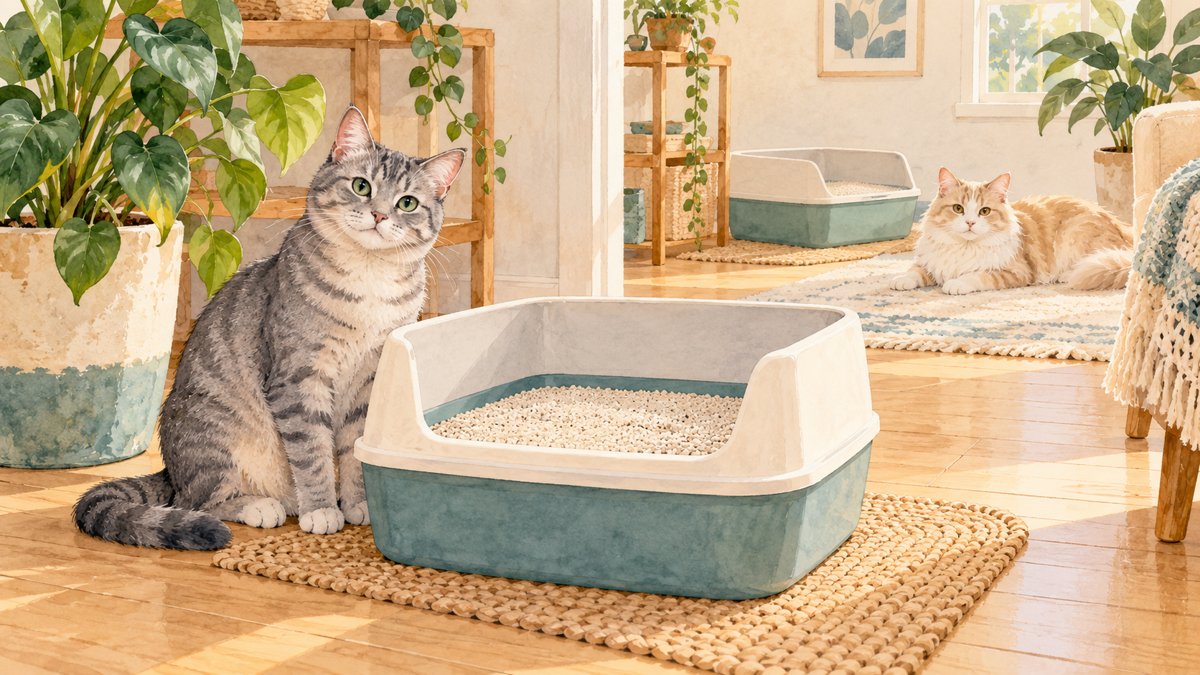
AI-generated editorial illustration; not a clinical photograph or diagnostic reference.
Finding urine on a bed or poop beside the tray is frustrating. It is tempting to call the cat naughty, but that label does not explain what changed.
A new toileting problem deserves a health check—even if your cat otherwise seems well. Then look at access, cleanliness, litter preference, and stress.
First: is your cat actually passing urine?
Repeated straining with little or no urine can mean a urinary blockage. Go to an emergency veterinarian immediately. Male cats are particularly at risk. Do not wait overnight, assume it is constipation, press the belly, or try a home remedy.
Blood in urine or painful urination also needs prompt veterinary advice.
Medical issue, spraying, or box avoidance?
The pattern can help your vet:
- Spraying: often a standing cat with an upright, trembling tail, depositing a small amount on a vertical surface.
- Toileting outside the box: often squatting over a horizontal surface.
- Difficulty passing stool: straining, hard stool, or diarrhea needs medical assessment rather than a training response.
These are clues, not a diagnosis. Pain and illness can coexist with stress or a dislike of the box. Describe what you observed rather than guessing why it happened.
Make the toilet easier to use
For multiple cats, begin with one tray per cat plus one extra, distributed around the home. Two cats therefore start with three trays. Adjacent trays may function as one toileting location; another cat can still block access.
Choose a roomy tray, with a low entrance when mobility is limited. A common size guideline is about 1.5 times the cat's nose-to-tail-base length. Scoop at least daily and offer a quiet location with an easy escape route.
If a new litter coincided with the problem, offer a separate tray with the previous litter. Many cats prefer soft, unscented litter. Let preference guide the choice.
Clean the accident, then investigate the pattern
Use a pet urine odor remover suitable for the surface and follow its instructions. Avoid ammonia-based cleaners. Do not shout, rub the cat's nose in the mess, or force it into the tray.
Cleanup option: Rocco & Roxie Professional Strength Stain & Odor Eliminator. This enzymatic cleaner is intended for pet stains and odors, including urine. Check the label for surface compatibility, test a hidden area first, and follow the application and drying instructions. Cleaning up an accident does not treat the medical or behavioral cause of house soiling.
Affiliate disclosure: As an Amazon Associate I earn from qualifying purchases.
View Rocco & Roxie Stain & Odor Eliminator on Amazon →
Keep a short diary: time, location, posture, urine or stool appearance, box use, and changes at home. In a multi-cat household, a camera may help identify the cat involved.
What about an automatic litter box?
Convenience for us does not establish that a cat feels comfortable using it. If accidents begin around a change of box, offering a conventional tray provides a useful comparison. Keep the medical appointment too.
The aim is a comfortable cat with a toilet it can reach and use confidently. When health and environment are addressed together, the plan is more useful than repeatedly buying a different litter.
Sources and further reading
- Cornell Feline Health Center: House Soiling
- Cornell Feline Health Center: Lower Urinary Tract Disease
- FelineVMA and iCatCare: Feline House-Soiling
- MSD Veterinary Manual: Behavior Problems in Cats
Sources checked October 2, 2026. This article provides general education; it cannot diagnose a cat from a photograph or replace a veterinary examination.
Affiliate Disclosure: This post contains affiliate links. If you purchase through these links, we may earn a small commission at no additional cost to you. We only recommend products we genuinely trust and believe will benefit your cats.