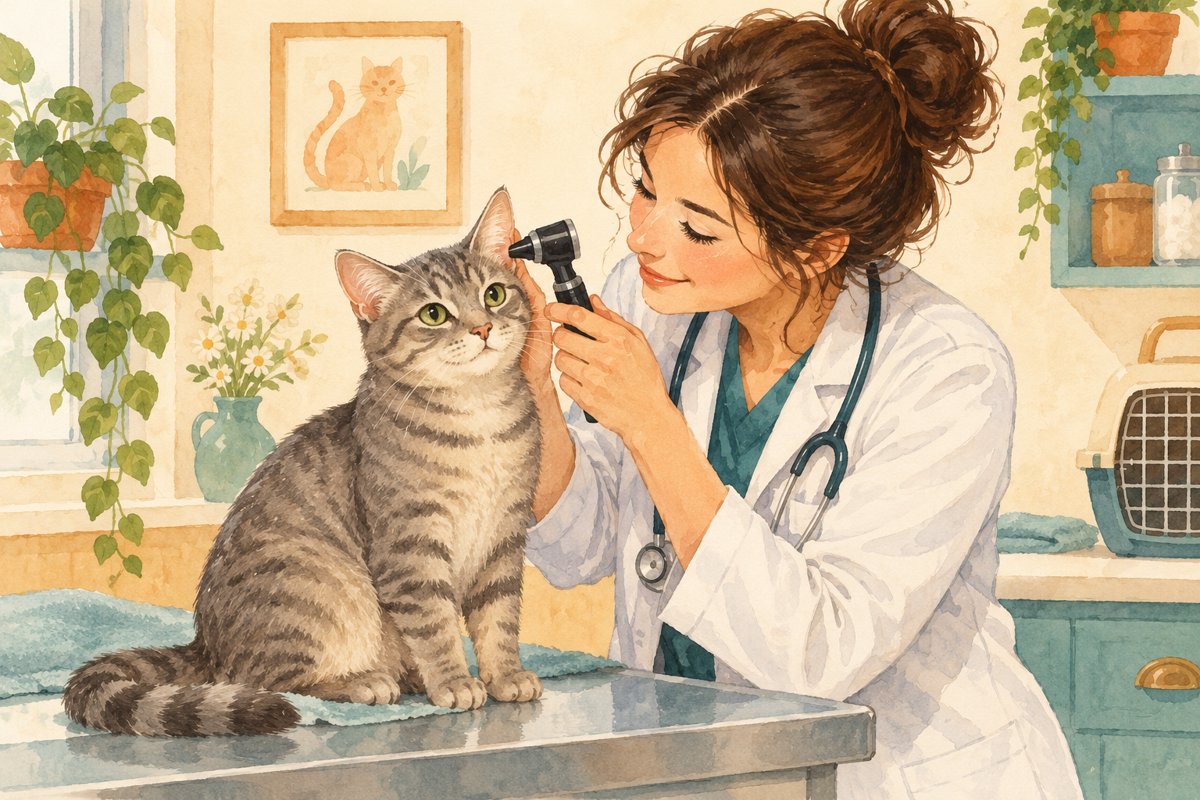
AI-generated editorial illustration; not a clinical photograph or diagnostic reference.
You lift your cat's ear and notice dark crumbs. Is it dirt, ear mites, or an infection?
The color alone cannot tell you. Before buying drops or cleaning deep inside the ear, look at the whole picture: scratching, smell, redness, discomfort, and whether the problem keeps returning.
What could cause the dark material?
Ear mites can produce dark wax and debris, often with itching and head shaking. They spread through close contact between animals. If mites are confirmed, ask your veterinarian which other pets in the household need assessment or treatment.
Ear inflammation or infection can also create dark discharge. Yeast may overgrow in an inflamed ear; other organisms or underlying problems can be involved. Treating the visible debris without addressing its cause may give only temporary improvement.
Other ear problems are possible too. A recurring problem, especially in one ear, deserves examination rather than repeated trial-and-error treatment. A social-media photograph cannot show the deeper canal or eardrum.
What will the vet check?
An otoscope helps the vet inspect the canal and eardrum. A sample of debris can be examined under a microscope to guide treatment.
Ask three practical questions:
- What is causing the problem?
- Is the eardrum intact, and is cleaning safe?
- How should I give the treatment, and when is the recheck?
Medication depends on the findings. An anti-mite product does not automatically treat every ear infection, and an antibiotic does not remove mites.
What can you do before the appointment?
Take a photograph without inserting anything into the ear. Note when the scratching began and whether one or both ears are affected. Bring the names of any products already used.
Do not probe the canal with cotton buds or tools. Avoid putting household oils, peroxide, alcohol, or leftover medication into an undiagnosed painful ear. Ask the clinic whether to leave the ear uncleaned before the visit so a sample can be collected.
If cleaning is prescribed, have the clinic demonstrate it. Stop and contact them if handling causes marked pain.
When should you seek help?
Persistent scratching, smell, discharge, or redness calls for a veterinary appointment. Marked pain, bleeding, a swollen ear flap, head tilt, or loss of balance warrants urgent assessment.
A little dark material is a reason to investigate, not a reason to panic. The useful first step is finding the cause—not choosing a treatment by the color of the wax.
Sources and further reading
- Cornell Feline Health Center: Ear Mites
- Cornell Feline Health Center: Otitis
- Cornell Feline Health Center: Feline Ear Disorders
- VCA Animal Hospitals: Ear Infections in Cats
Sources checked October 2, 2026. This article provides general education; it cannot diagnose a cat from a photograph or replace a veterinary examination.
Affiliate Disclosure: This post contains affiliate links. If you purchase through these links, we may earn a small commission at no additional cost to you. We only recommend products we genuinely trust and believe will benefit your cats.